


Moving is a challenge on its own, but when you add plants into the mix, things get even trickier. These leafy companions are more than just décor — they’re part of your home, and you want them to survive the journey. But plants are sensitive creatures, reacting to sudden changes in temperature, light, and handling.
Whether you’re moving cross-country or just relocating locally, taking the right steps will ensure your plant babies make the journey safely. You'll find everything you need to know about how to move with plants smoothly and stress-free, from essential preparations to expert packing and transportation tips.
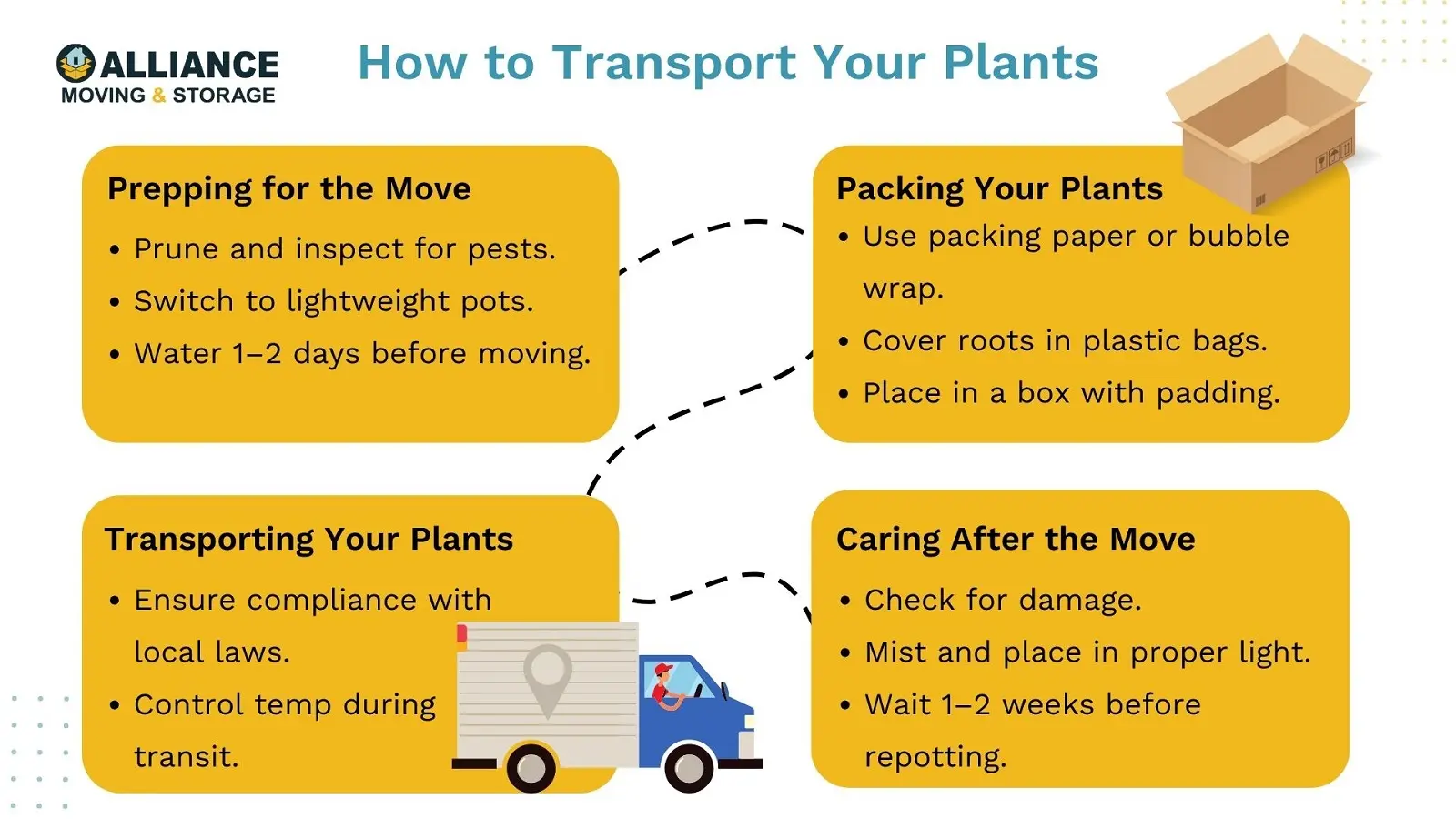
Prepping Your Plants for the Move
Moving plants successfully begins weeks before the actual moving day. Preparing your house plants properly can significantly reduce stress during the move, ensuring that your beloved plants adapt quickly to their new environment.
Prune and Inspect Your Plants
A few weeks before the move, give your plants a little TLC. Trim off dead or damaged leaves and stems to improve air circulation and keep them in top shape for the journey. A neater plant is also easier to pack.
Next, check for pests. Inspect the leaves, stems, and soil for any unwanted hitchhikers. If you spot insects or signs of disease, treat them with neem oil or insecticidal soap. If a plant is heavily infested, consider taking a cutting instead of moving the entire plant.
Swap Heavy Pots for Lighter Options
If your plants live in heavy ceramic pots, consider moving them to lightweight plastic containers before the big day. This reduces the risk of breakage and makes them much easier to carry. Just don’t repot too close to the move — plants need time to adjust to new soil.
Do you have oversized planters filled with soil, plants, and rocks? They can be a nightmare to transport. Use a planter caddy or a dolly to save yourself some heavy lifting, or fill the bottom with shredded Styrofoam to cut down on weight.
Transplant Trees and Bushes
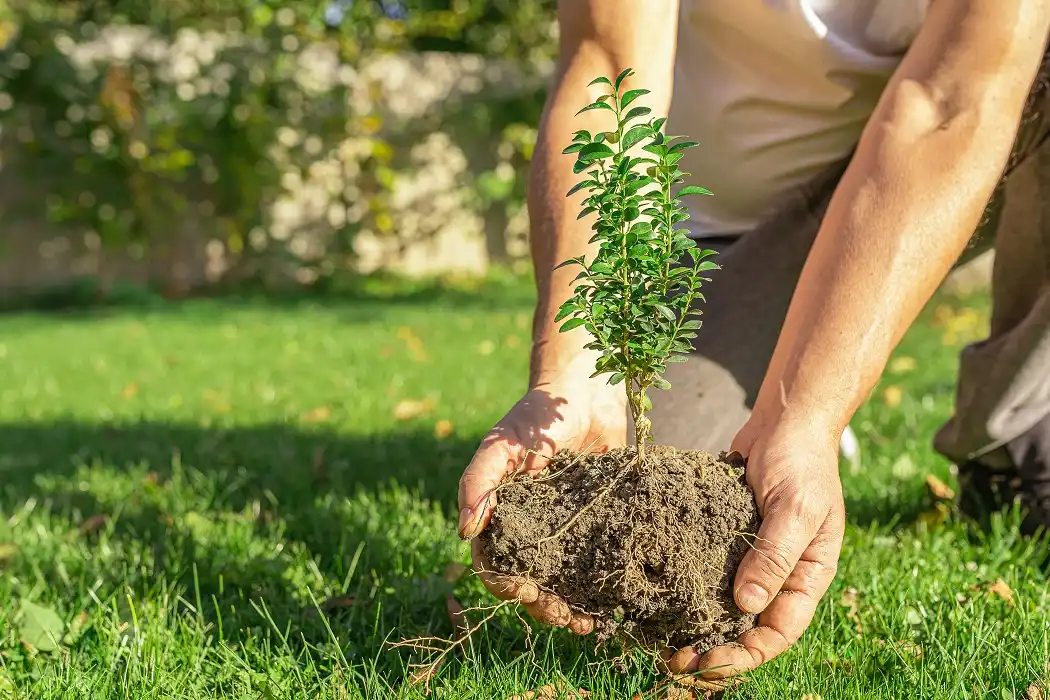
If you’re planning to move small trees or bushes, make sure to do it at the right time. The best window is after the leaves have dropped in the fall but before buds appear in the spring.
Prepare the new planting spot ahead of time by digging a hole that’s twice as wide as the root ball and just as deep. A couple of days before the move, give the plant a deep watering and trim any dead branches. Then, when it’s time to dig it up, be careful to keep the root ball intact. Wrap the roots in a tarp or place the plant in a container to keep moisture in during the move.
Use a Smart Watering Strategy
Timing is everything when it comes to watering before a move. A day or two before you pack up, give your plants just enough water to keep the soil slightly moist. Too much water can lead to root rot, especially on longer moves.
If you're relocating to a different climate, start adjusting your watering routine ahead of time to help your plants transition smoothly.
Adjust Plants to New Light & Temperature Conditions
Plants don’t like sudden changes. If your new home has a different climate or lighting conditions, ease them into it before the move.
For example, if you're heading somewhere sunnier, start placing your plants in brighter spots for increasing amounts of time. This gradual adjustment helps prevent shock and gives them a better chance of thriving in their new space.
How to Safely Pack Plants for Moving
Packing plants isn’t as simple as tossing them in a box and hoping for the best. They’re fragile, sensitive to movement, and need the right packing materials to arrive in one piece. Follow these steps to pack your plants properly and make sure they survive the journey.
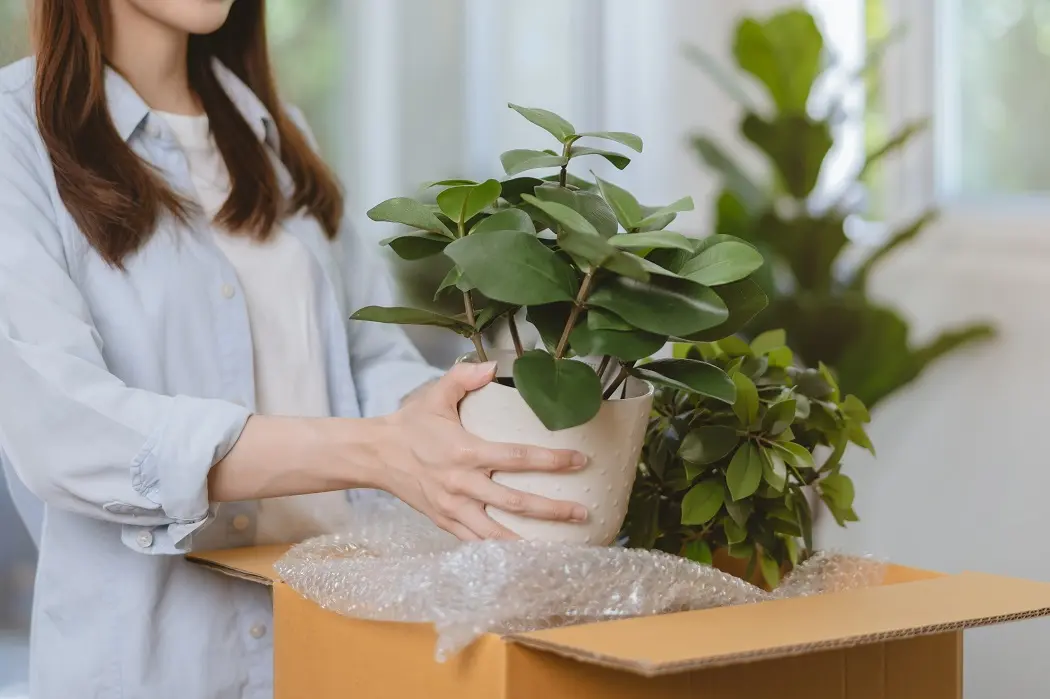
- Wrap the plant: Gently wrap the leaves and stems with packing paper or bubble wrap to prevent damage. Secure it with tape, but don’t overdo it — plants need airflow to stay healthy.
- Prepare the pots: If your plant is sitting in a bulky ceramic or clay pot, consider moving it to a lightweight plastic container. This makes it easier to handle and reduces the risk of breakage during transport.
- Protect the roots: To avoid messy spills, cover the soil with a plastic bag and secure it around the base of the plant. This keeps dirt in place while still allowing airflow.
- Place in a box: Select a cardboard box just big enough to hold the plant and pot comfortably. Use packing paper or bubble wrap to cushion the sides and prevent movement within the box.
- Use wooden crates (optionally): For larger or top-heavy plants, a wooden crate can provide extra stability and prevent tipping. This is especially useful for trees, large ferns, or plants with delicate stems.
- Seal and label: Once everything is packed, tape the box securely and mark it as fragile. If you’re moving multiple plants, give them enough breathing room — don’t cram them together.
- Shield from heat and light: During transport, keep plants in a shaded part of the vehicle and out of direct sunlight. Too much heat can dry them out quickly, leading to stress and wilting.
By following these packing steps, your plants will have the best chance of staying safe and healthy during the move, ready to thrive in their new home.
Getting Your Plants to Their New Home
Relocating plants involves choosing the right transportation method and carefully securing them during the journey. From temperature control to legal regulations, every detail ensures your plants thrive in their new home.
Choose Your Transportation Method
There are several ways to move your plants, depending on distance, budget, and collection size. Here’s a comparison of common methods:
Remember, whether you opt for personal transport, a DIY moving truck, professional movers, or shipping, it’s important to ensure that your plants are protected from temperature extremes and physical damage.
Load and Secure
Place plants upright in open-top boxes or crates, and cushion them with crumpled paper to prevent shifting. For tall plants, tie stems gently to stakes to prevent bending or breakage. Always load your plants into the vehicle last and unload them first upon arrival to minimize stress and temperature exposure.
Plants thrive in temperatures between 60-75°F, so avoid exposing them to extreme heat or cold for too long. Sunlight can also be harmful during transit — if plants are in direct sunlight, loosely drape a light cloth over them to prevent leaf damage. Keep them inside the vehicle whenever possible, and never leave them in a parked car for extended periods, as temperatures can rise dangerously fast.
How to Move Cross Country with Plants: Legal and Regulatory Considerations
If you’re moving long-distance, don’t forget to check state regulations on plant transportation. Many states have rules in place to prevent the spread of pests and plant diseases.
The U.S. Department of Agriculture (USDA) regulates plant transportation, and you can find up-to-date information on their official website. Additionally, certain states like California, Arizona, and Florida have stricter regulations. The National Plant Board provides a database of state-specific plant movement laws.
For plants classified as restricted, a phytosanitary certificate may be required, which verifies that the plant is pest-free. Obtain this from your local agricultural office before the move.
Caring for Plants After the Move
Relocating is stressful for plants, but with the right care, they’ll settle in quickly. Follow these steps to help them bounce back.
Take Immediate Steps Upon Arrival
Once you’ve arrived, your plants should be one of the first things you unpack. A little extra care right away can make all the difference:
- Unpack first: Gently remove plants from their boxes and check for any damage.
- Check for stress: Wilted leaves or broken stems? Trim damaged areas with clean scissors.
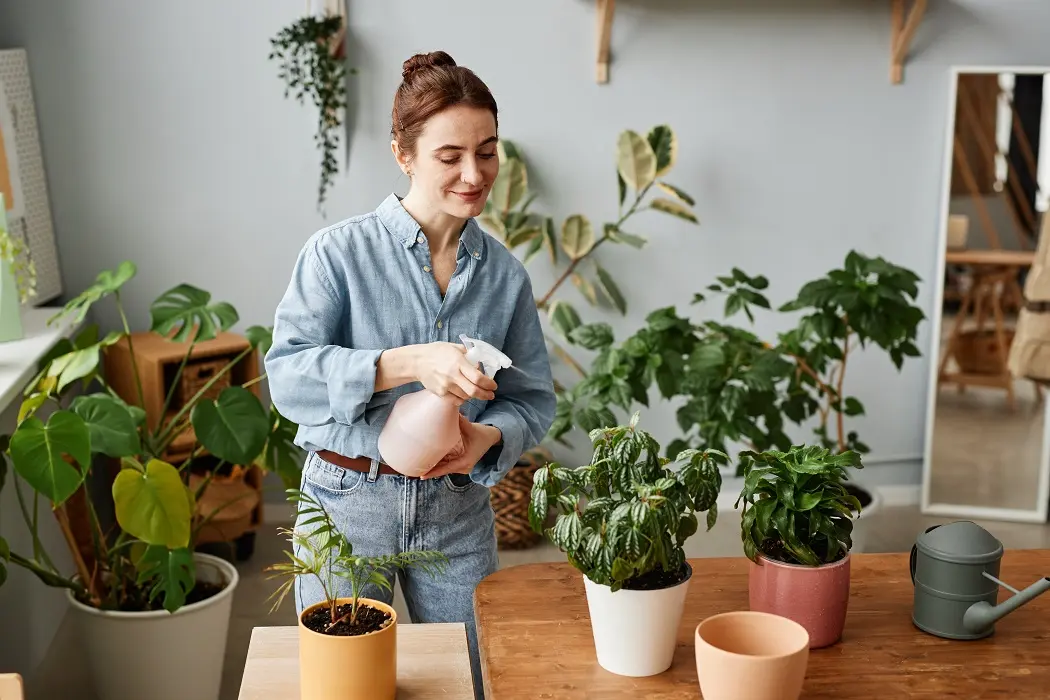
- Hydrate lightly: If the leaves look dry, mist them, but don’t overwater — roots need time to adjust.
Take the time to inspect and hydrate your beloved plants properly, and soon enough, they’ll bounce back, adapting to their new surroundings. Remember, patience and care go a long way in helping your plants settle in.
Find the Perfect Spot
Choose the right location to ease your plants' transition. Start with bright, indirect light, avoiding direct sun that can scorch sensitive plants like ferns. Observe daily light patterns to match each plant's needs.
Consider humidity and temperature: tropical plants enjoy humid rooms, while succulents prefer dry, sunny spots. Avoid drafts and heating vents that cause leaf drop. Rotate your plants slightly over the next few days for even growth and acclimation.
When to Repot Plants After Moving
Hold off on repotting your plants for at least 1–2 weeks. Moving is already stressful, and repotting too soon can shock their system even more.
Repot only if:
- The pot is damaged.
- Roots are growing through the drainage holes.
- The soil is compacted and drains poorly.
When repotting, choose a container just slightly larger than the current one. Use fresh potting mix suited to the plant’s needs — succulents need a well-draining cactus mix, while tropical plants prefer moisture-retentive soil. A good repotting refreshes nutrients and gives your plants room to grow in their new home.
Ensure a Smooth Plant Move with Alliance Moving & Storage
Moving plants doesn’t have to be a hassle. With the right preparation, your leafy companions can transition smoothly to their new home. Packing them correctly, transporting them with care, and helping them adjust after the move will set them up for success.
If you're looking for reliable movers in Chicago and the suburbs, consider Alliance Moving & Storage in Chicago. We offer long-distance moving services as well as local moves. We provide not only moving services but also packing and loading services for your plants and other belongings. Contact us today for a seamless and stress-free moving experience.


.webp)
.jpg)