




Moving comes with enough stress — you don’t need confusing price quotes on top of it. One of the biggest decisions you’ll face is picking the type of estimate you want from your movers. This isn’t just a small detail. It affects what you’ll pay, how your final bill looks, and how much peace of mind you’ll have throughout the move.
Whether you're only relocating locally or planning a long-distance move to another state, knowing how these estimates work will save you from costly surprises later. Let’s walk through the differences so you can book your move with confidence and no guesswork.
What Is a Moving Estimate?

A moving estimate is a written contract between you and the moving company that outlines the projected costs of your relocation. It lists the expected fees for transport, labor, additional services like unpacking service fees, and other moving cost factors.
Think of it as a blueprint for your moving expenses and a promise between you and the movers about what services you'll get. Never rely on a handshake deal or phone quote. Always get it in writing. That way, there’s no room for confusion on moving day when everyone’s under pressure.
What to Know About Binding Estimates
A binding estimate means the price you agree on upfront won’t change, as long as nothing major about your move changes. If your inventory and services stay the same, so does your cost.
So, What Is a Binding Estimate Fee for Moving?
A binding estimate gives you a guaranteed price for your move. That means once it’s set, your cost won’t change — even if your shipment weighs more or less than expected. The moving company calculates this fee after reviewing your home’s inventory.
This price is based on a detailed evaluation of your belongings, the distance you’re moving, and any extra services you ask for. It acts like a pricing agreement that shields you from unexpected cost increases. Many customers find that using a moving cost calculator in conjunction with a professional assessment helps them better understand and prepare for their binding estimate fee.
Advantages and Disadvantages of Binding Estimates
Binding estimates offer clarity and control, but they’re not always the cheapest option. You might pay a higher binding estimate amount even if the actual cost turns out to be lower. Moreover, if you need to add items or services like loading and unloading on moving day, your movers may refuse service unless a new binding estimate is issued.
Rules and Regulations for Binding Estimates
That peace of mind comes with a few rules you and your mover must follow. The Federal Motor Carrier Safety Administration (FMCSA) sets the standards that define how binding estimates work.
- Fixed cost at delivery: Your mover can’t charge more than the amount in your binding estimate unless there are agreed-upon changes.
- Updated terms if changes are made: Adding items or services means both parties need to agree in writing to either adjust the estimate or switch to a non-binding one.
- Written changes required: If there’s no written agreement before loading, the original estimate remains valid and enforceable.
- Mover can decline last-minute changes: If you and the mover can’t agree on the updates, they have the right to cancel or refuse the job.
- Extra delivery charges may apply: Complications like long carries, stairs, or tight parking can result in additional fees, either at drop-off or within 30 days.
These rules are in place to protect your estimate and make sure both sides are treated fairly. Still, it’s always smart to read your contract closely so you’re not caught off guard by any fine print that could change how your estimate works.
Non-Binding Moving Estimates Explained
A non-binding estimate offers more flexibility but less price certainty. If you’re considering one, it’s important to understand how it works so you can prepare your budget and avoid unexpected charges when moving day arrives.
What Is a Non-Binding Estimate for Moving?
A non-binding estimate is a preliminary projection of moving costs. The moving company provides a price estimate based on visual inspection or your inventory list. On moving day, they will weigh the empty truck, load your belongings, and then weigh the moving truck again. The difference determines the actual weight, and therefore, your final bill.
Unlike a binding estimate, this number isn’t set in stone. If your move ends up requiring more labor or your load is heavier than expected, your total cost will go up. This type of estimate adjusts to what really happens on moving day, not just what was originally assumed.
Advantages and Disadvantages of Non-Binding Estimates
While a non-binding agreement can offer a lower price upfront, it's less predictable. It's ideal for people who can accurately estimate their load or who are open to price changes based on actual weight and service fees.
Rules and Regulations for Non-Binding Estimates
The FMCSA has established specific guidelines for non-binding estimates to protect consumers from significant price increases or moving scams:
- Estimates must be reasonably close: Movers are expected to give you a fair and realistic projection, not just a low number to win your business.
- Everything needs to be in writing: The estimate has to include details about your household items and all services being offered.
- You can’t be charged more than 110% at delivery: Even if the final bill is higher, movers can’t demand more than 110% of the original quote on the spot.
- Extra items? They need to update the paperwork: If something changes during loading, the mover must either adjust the estimate or confirm the original term.
- Storage if you can’t pay: If you can’t pay 110% at delivery, your shipment may be placed in a storage facility at your own expense until charges are covered.
These rules are designed to protect you from surprise charges while still offering the flexibility that comes with a non-binding setup. Just be aware that local moves may follow different regulations depending on where you live.
Binding vs. Non-Binding: Which Should You Choose?
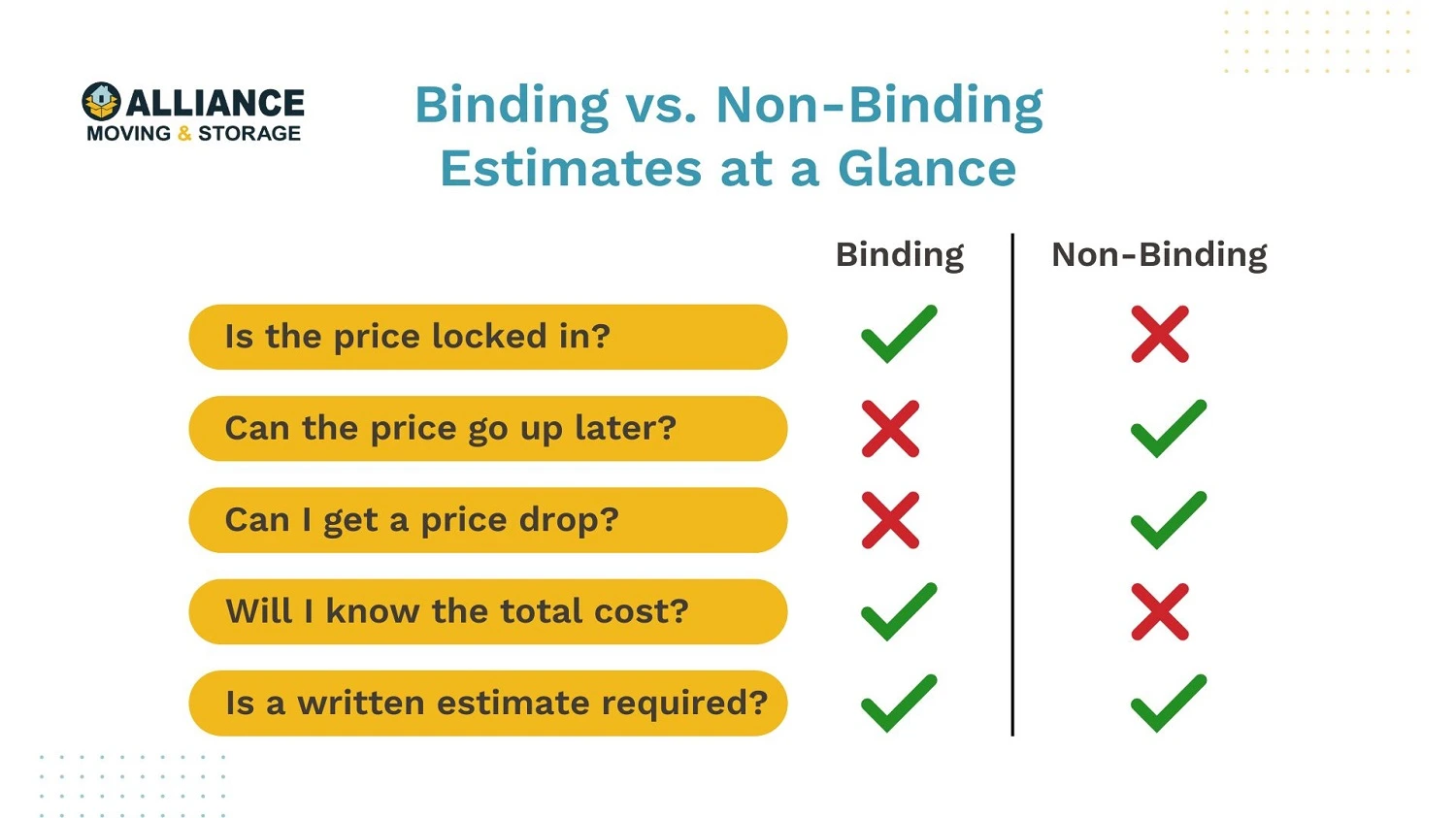
The best estimate for your move depends on your priorities and how much flexibility you need. There’s no universal answer, but knowing when each type makes sense can help you make a smarter decision.
- Choose a binding estimate if: You want a firm price upfront, you know exactly what you’re moving, you’re booking during peak season when rates may rise, or your items need special handling and you don’t want surprises.
- Choose a non-binding estimate if: Your inventory might change before moving day, you're downsizing and may have fewer items than initially thought, you're working with a highly reputable moving company with excellent reviews, or you want to potentially save money if your actual weight is less than estimated.
Before you choose, talk openly with your movers. Ask them how they build their estimates, what could affect the final price, and how they handle last-minute changes. A reputable company will be upfront about their process and help guide you to the right option.
Warning Signs of Scams
Scams do happen in the moving industry, and they can affect both binding and non-binding estimates. Knowing what to watch for can protect you from hidden fees, delays, or worse.
- Too-low pricing: If one quote is dramatically cheaper than the rest, be careful. Some companies reel you in with a low number, then raise the price once your items are packed.
- Huge deposits: You shouldn’t have to pay a large sum before the move begins. A small deposit is normal, but anything excessive should be questioned.
- Vague or missing paperwork: Reliable movers give you a clear, written estimate that spells out whether it’s binding or non-binding. If they avoid paperwork, walk away.
- No USDOT number verification: For interstate moves, ensure the company has a valid USDOT number that can be verified on the FMCSA search page.
- Poor reviews or no online presence: Check the company's reputation through reviews and verify how long they've been in business before signing any moving contract.
Taking time to check out companies before hiring can save you from making common moving mistakes that turn your move into a nightmare. Remember, a little research goes a long way in finding honest movers.
Make Your Move with Confidence

Deciding between a binding or non-binding moving estimate comes down to what you value most — predictability or flexibility. If having a clear, fixed cost is important to you, a binding estimate is the way to go. It gives you full confidence in what you’ll pay, with no surprises. If you're okay with some adjustments and your inventory is still evolving, a non-binding estimate may fit your situation better.
If you're searching for a trustworthy Chicago moving company, we’re here to help. Our team provides reliable moving services tailored to your needs — whether you're headed across the city or across the country. We offer estimates with full transparency, so you know what to expect every step of the way. Contact us today to get honest pricing with no hidden fees!





.jpg)