




Moving comes with a lot of excitement — and a ton of paperwork. Forget the right documents, and you could end up stuck, delayed, or out of pocket. Whether you're planning local moves across town or cross-country moves that span state lines, having your paperwork in order — things like ID, school records, and tax info — makes everything easier from the start
Our comprehensive guide will walk you through each category of important papers, explain their significance, and provide practical tips to ensure nothing falls through the cracks as you start your new journey.
If you want to keep things extra organized, we've also prepared a downloadable checklist of documents to gather when moving out. Make sure to download it before your big move!
Important Documents to Take When Moving Out

Preparing the right paperwork before your big move ensures a smooth transition to your new home. Here's a comprehensive list of essential documents you shouldn't leave behind.
Personal Identification Documents
Some documents are non-negotiable. If you’re starting a new job, applying for services, or enrolling in school, these are the records that confirm who you are and what benefits you’re entitled to:
- Social Security card: Needed for job verification and opening financial accounts.
- Birth certificate: Often required for schools, licenses, or ID replacement.
- Passport: Works as a strong secondary ID if your license isn’t current.
- Driver's license: Most states require an updated license within 30 days.
- Marriage certificates/divorce decrees: Used to verify name changes or claim benefits.
- Military IDs: Help access veteran benefits and military discounts.
Keep these in a labeled folder or document case that stays with you during the move, not in the moving truck.
Financial Documents
Financial stability during a move depends largely on having the right paperwork readily available. These documents ensure continuous access to your funds and help establish your financial presence in your new location. Here's what you should gather:
- Bank account details and voided checks: Needed for setting up payments or direct deposits.
- Recent tax returns and W-2s (3–7 years): Often required for mortgages or lease applications.
- Loan paperwork: Make sure mortgage, student, or personal loan info is all accounted for.
- Credit card statements and pay stubs: Useful for proving income or establishing credit.
These items may be needed as early as moving day if you’re applying for a loan or setting up accounts. Keeping them organized ensures smoother transitions and fewer headaches, especially if you’re trying to save money on reconnections or documentation replacements.
Housing, Lease, and Property-Related Documents
The paperwork related to where you're living — both your old home and your new residence — forms the legal foundation of your move. These documents protect your rights, security deposits, and financial interests during this transition period. Make sure to keep these documents accessible:
- Lease agreements or property deeds: Outline rights and responsibilities for both properties.
- Utility contracts and receipts: Prevent billing issues and prove obligations were fulfilled.
- Mortgage paperwork: Contains loan terms and lender contact information.
- Homeowner’s or renter’s insurance policies: Ensure continuous coverage of your belongings.
These documents often contain time-sensitive information that may require immediate attention upon arrival. Keeping them organized and accessible can prevent complications with both your former and new landlords or mortgage companies.
Educational and Medical Records

Moving shouldn’t put your health or your child’s education on hold. These documents make it easier to transfer care, avoid delays, and enroll without stress. Prioritize the records below to stay covered:
- Personal medical records: Keep your medical history available for new providers.
- Vaccination histories: Required for school enrollment and often for new doctors, especially for kids and pets.
- Health insurance documents: Allow you to navigate care in your new location or respond to emergencies.
- Prescription records and transfer forms: Help avoid missing critical medications.
- Pet vet records and vaccination certificates: Needed to register your pet or get immediate care.
Many states won't allow children to begin school without proper vaccination records, and health problems don't pause for your move. Having these documents readily available prevents disruptions to medical care.
Vehicle Documents
If you're bringing a car, motorcycle, or RV, you’ll need to keep certain documents close. They’ll help you meet state requirements, avoid tickets, and keep insurance active:
- Vehicle title and registration: Required to verify ownership and register in your new state.
- Auto insurance card: Proves active coverage during and after your move.
- Maintenance and service history: Helps with warranty work or new mechanic visits.
When planning an out-of-state move, remember that vehicle registration requirements vary by state. Some require registration within 10 days, while others allow up to 90 days. Proper organization saves time and prevents penalties.
Legal Documents and Warranties
Legal documents and warranties don’t stop being important because you’ve changed addresses. Keep the following close to avoid problems or missed protections:
- Wills, powers of attorney, living wills: Ensures your wishes are respected in emergencies.
- Legal contracts and agreements: Contractual obligations remain binding despite address changes.
- Warranties and product manuals: Allow warranty claims for damaged or malfunctioning items.
- Appliance manuals: Useful when reconnecting or troubleshooting your own appliances post-move.
These documents represent significant life decisions and financial investments. Keeping them organized and accessible protects both your assets and your peace of mind during and after your move.
Documents Needed When Moving Out of State
Moving to a new state means dealing with paperwork that doesn’t come up during local moves. Having the right documents ahead of time helps you avoid surprises, delays, or legal issues once you arrive:
- Work permit or employment contract: If you're starting a job or moving to another state.
- Proof of residency documents (utility bills, lease): Essential for DMV and school registrations.
- Driver’s license and car registration documents: You’ll likely need to switch these within 30 days.
- Voter registration card: Maintains voting rights in your new community.
Being proactive prevents unexpected moving mistakes and ensures a smoother transition. If moving with vehicles, understanding state-to-state moving requirements ensures compliance with local laws.
How to Pack Important Documents for Moving
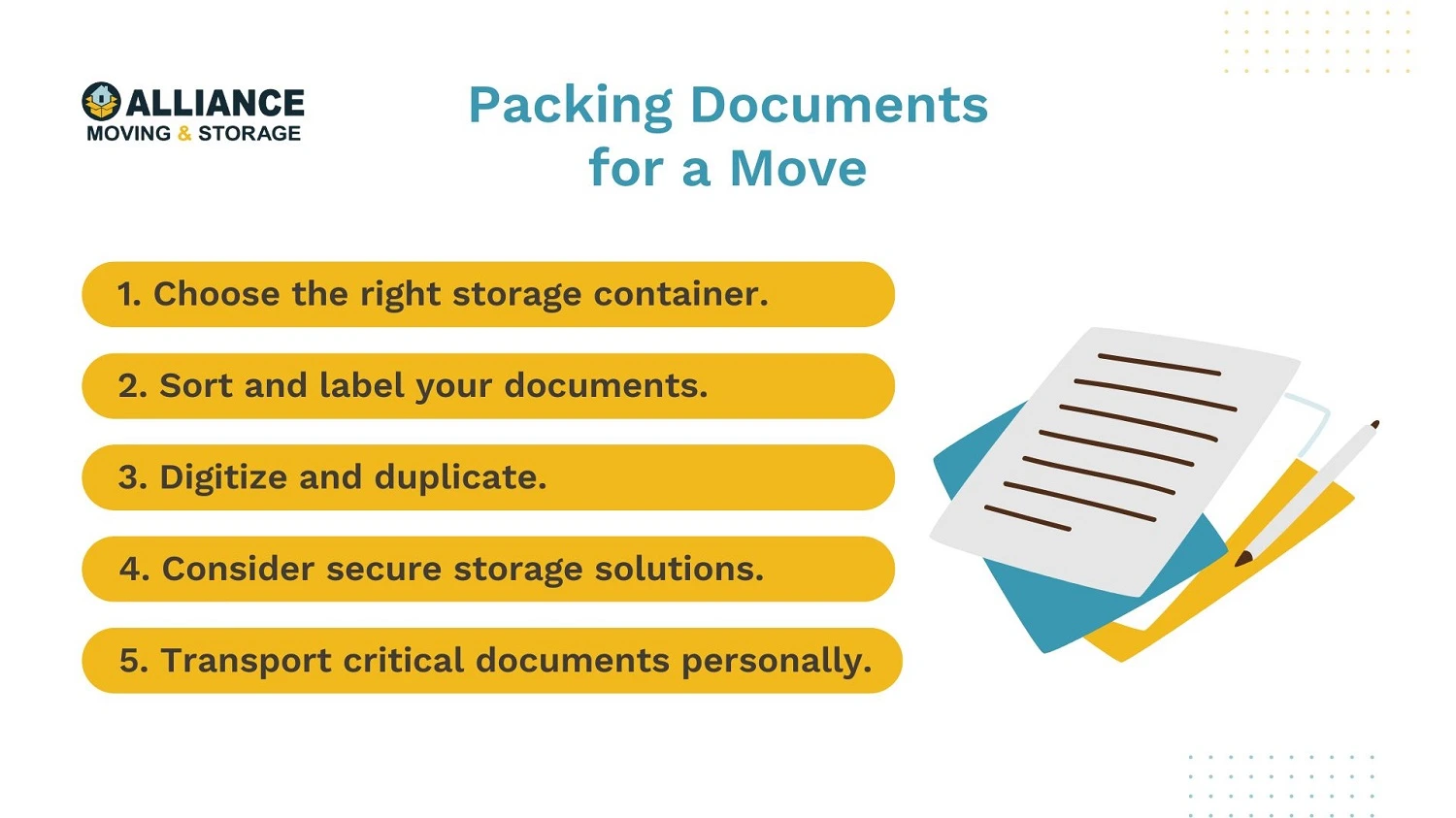
The last thing you want is to dig through boxes looking for tax records or lease papers. Start prepping your documents 3–4 weeks in advance so nothing goes missing or gets damaged during the move.
1. Choose the Right Container
Invest in a waterproof document organizer that provides both protection and accessibility. Fireproof and waterproof lockboxes offer the best protection for your most critical papers. Whatever portable storage container you choose, ensure it has secure closures and will be easy to transport separately from your other belongings.
2. Sort and Label Your Documents
Divide everything into categories — medical, financial, legal, school, etc. — and place them into labeled folders or color-coded sections. Use tab dividers to keep things easy to flip through. Want to find your insurance info fast? You’ll know exactly where it is. This setup pays off when you need to show proof of address, transfer medical care, or file paperwork shortly after arriving.
3. Digitize and Duplicate
Use tech to your advantage. Scan your key paperwork — ID, financial records, legal forms — and save digital copies to an encrypted USB drive and a secure cloud platform with two-factor authentication. For essential records like passports or birth certificates, it’s smart to make physical photocopies too. If something goes missing during the move, your backup copies will save the day.
4. Consider Secure Storage Solutions
For certain documents, professional document storage services can provide peace of mind. Climate-controlled storage units protect documents from environmental damage while offering enhanced security features. Choosing a document storage company is particularly valuable for historical family documents, extensive collections of financial records, or legal papers that you don't need immediate access to but want to keep safe during your transition.
5. Transport Critical Documents Personally
No matter how you’re traveling, keep your most important files with you at all times. You could be asked for documents mid-trip, or need them before the rest of your belongings arrive. Carrying them with you keeps them accessible, safe, and out of risk while your boxes are in transit.
Documents to Update After Your Move
Arriving at your new home marks the beginning of an important administrative process. Here's what needs updating once you've settled in:
- Change of address forms: File this with the USPS at least two weeks before moving to ensure mail forwarding begins promptly when you arrive at your new home.
- Driver's license and vehicle registration: Most states require updates within a specific timeframe (typically 10–90 days) after establishing residency.
- Driver's license and vehicle registration: Most states give you between 10 and 90 days to update this info after you’ve moved in. Don’t wait — get it done early.
- Voter registration: Updating your voter info lets you vote locally and keeps you on the right election lists in your new area.
- Insurance policies: Reach out to your providers to update your address and confirm your coverage still fits your new home, car, or health needs.
- Bank accounts and financial institutions: Let your bank, credit card companies, and any loan providers know your new address so you don’t miss important statements or alerts.
- Medical providers and pharmacies: Transfer prescriptions, find new doctors, and make sure your health info is up to date in your new location.
Updating these records takes time, but it’s crucial for keeping things running smoothly. Create a checklist and take care of these items early so you can settle in without distractions. Need more help? Check out our full list of things to do after moving.
Securing Your Essential Documents During Your Move
Properly managing all the important documents during a move protects your identity, financial security, and legal standing during this vulnerable transition period. The time invested in organizing these papers prevents problems and ensures a smooth start in your new home.
Don’t underestimate the value of document storage, especially for large or complex moves. Consider professional assistance from Alliance Moving & Storage, a trusted Chicago storage and moving company. We offer secure document storage alongside expert packing and transportation services. Our team understands the complexities of relocating everything from furniture to sensitive paperwork. Contact us today and discover how we can help make your transition seamless.





.jpg)