


Moving your two-bedroom apartment can be both exciting and daunting. Whether you're relocating across town or to a different state, knowing the average moving two-bedroom apartment cost is an important piece of the puzzle for planning your budget.
Don’t go into your move blindly. Our team at Alliance Moving & Storage has put together a helpful guide that breaks down the costs so you know what to expect. Here are some valuable cost-saving tips for a smooth transition to your new home.
Understanding Moving Costs for a Two-Bedroom Apartment in Chicago
Professional movers in Chicago use a straightforward pricing model that combines three main elements. First, there's an hourly rate based on crew size. Then you've got travel fees that cover the distance your movers drive. Finally, material costs account for the supplies used to protect your belongings during transport.
You shouldn’t be left guessing about prices, as most reputable companies provide detailed estimates upfront. They'll want to know what you're moving, where you're going, and any tricky details like narrow staircases or buildings without elevators. These factors directly impact how long your move takes, which affects your final bill.
Real Numbers: What Chicago Two-Bedroom Moves Might Cost
Here's where things get practical. The cost to move a two-bedroom apartment in Chicago typically ranges from $700 to $1,400, though your specific situation could fall outside this range.
Several factors push costs up or down:
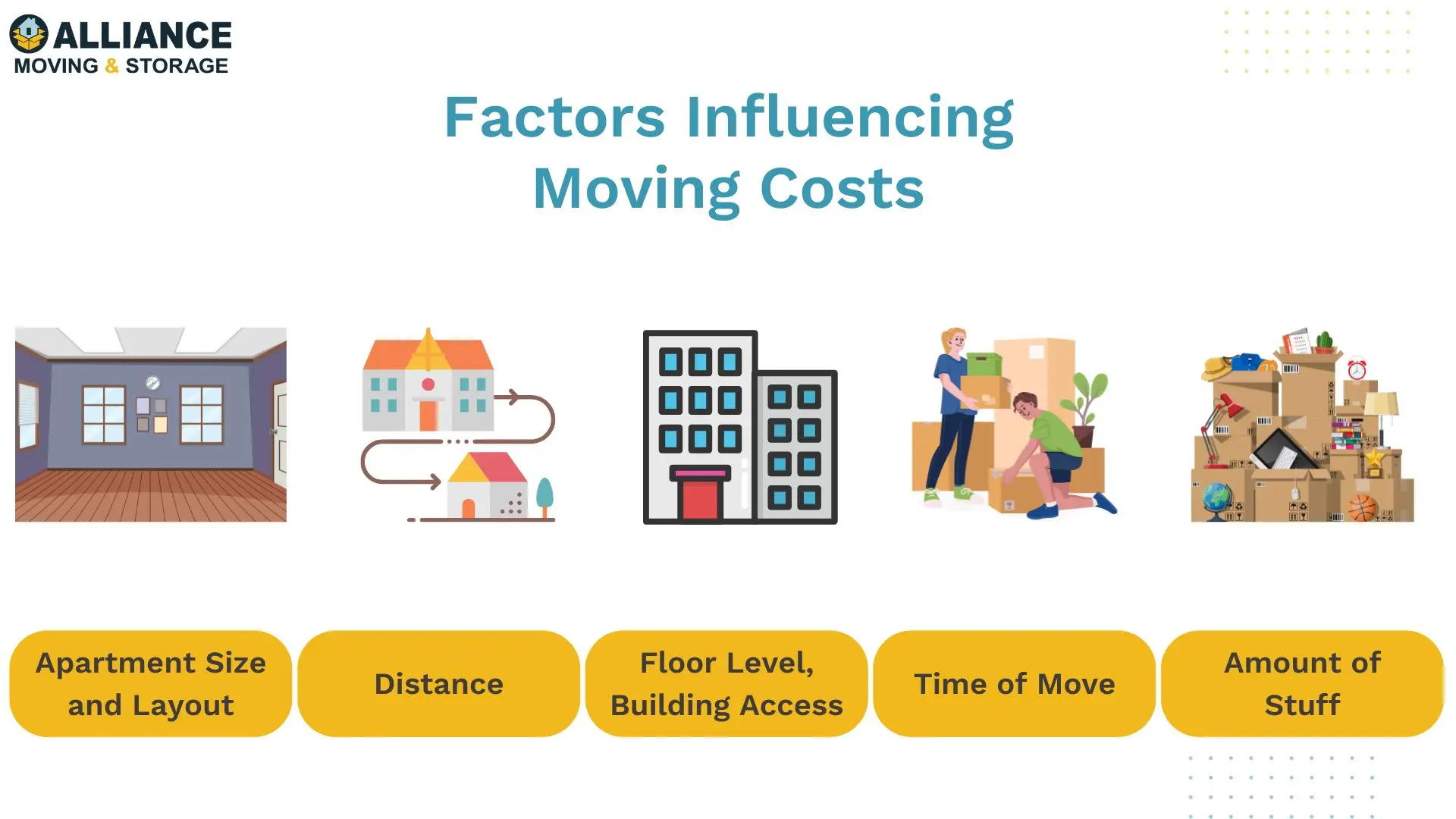
- Apartment size and layout: A compact 800-square-foot place costs less to move than a sprawling 1,200-square-foot unit. More square footage usually means more belongings.
- Distance between locations: Moving within the same neighborhood is a dramatically different experience from relocating across the city. Travel fees increase with distance, and longer drives mean more time on the clock.
- Floor level and building access: Ground-floor apartments with parking right outside move faster than third-floor walkups. Buildings with freight elevators save time compared to narrow residential elevators or stairs.
- Time of move: Summer weekends at month-end represent peak moving time in Chicago. Moving during the week in winter could save you 20-30% compared to peak rates.
- Amount of stuff: Two people living in a two-bedroom typically own less than a family of four in the same space. More belongings equal more time and potentially a larger crew.
What You'll Pay per Hour for Your Moving Crew
Hourly rates form the backbone of your moving costs. These rates shift based on how many movers you need, and sometimes vary depending on when you're moving. Peak moving times (weekends, month-end, summer) often come with higher rates than off-peak periods.
Here's what typical hourly rates look like across Chicago:
The crew size you need depends entirely on what needs moving. Do you have a sectional sofa, a king bed, and a heavy dresser? You'll probably need four movers working in pairs to handle those safely. Living minimally with mostly boxes and lighter furniture? A two or three-person team might handle everything efficiently.
Remember, larger crews cost more per hour but often finish faster, which can balance out in the end.
Breaking Down Travel Fees
Travel fees cover the time your moving crew spends getting to and from your locations. Think of it this way: your movers don't magically appear at your door and disappear afterward. They drive from their facility to your place, and then return after finishing your move. You’ll have to compensate them accordingly.
Here's how it works:
- First leg: Movers travel from their company location to your current apartment. This distance gets factored into your travel fee.
- Middle portion: The drive from your old place to your new one happens while the crew is already on the clock at their hourly rate. This doesn't add to travel fees specifically, but counts toward the total move time.
- Final leg: After unloading at your new apartment, movers return to their facility. This distance also counts toward travel fees.
Material Costs and What They Cover
Materials play a pivotal role in protecting your belongings during the move. Different companies handle material fees differently, but here are the typical moving supplies:
- Moving boxes (assorted sizes): Sturdy corrugated cardboard used to contain items. Sizes range from small (for heavy items like books) to extra-large (for light, bulky items).
- Specialty boxes: Custom-designed containers like wardrobe boxes (for hanging clothes) and dish packs (extra-sturdy with dividers for fragile items).
- Packing paper (newsprint): Clean, ink-free paper used for individually wrapping all fragile items and for filling space (void-fill) in boxes.
- Bubble wrap: Plastic sheeting with air-filled pockets for cushioning and protecting highly fragile items and electronics from impact.
- Moving blankets/pads: Thick, quilted fabric used to wrap large furniture, appliances, and delicate surfaces to prevent scratches and dents.
- Stretch wrap (plastic wrap): Industrial film used to secure bundles (like rugs) or to wrap upholstered furniture to protect it from dirt, moisture, and to keep drawers closed.
- Packing tape: Strong adhesive tape used to securely seal all moving boxes and secure wrapping materials.
- Permanent markers & labels: Used for clearly marking boxes with contents, destination room, and special instructions ("fragile").
- Mattress covers/bags: Oversized plastic bags used to protect mattresses and box springs from dirt and moisture.
- Packing peanuts/foam: Loose-fill or sheets used to cushion fragile items and fill voids in boxes to prevent shifting.
- Hand trucks/dollies: Essential equipment used to safely lift and move heavy, large stacks of boxes or appliances.
- Moving straps: Woven straps that use leverage for safely lifting and carrying heavy, bulky furniture.
Some movers charge per item used, tallying up each blanket and roll of tape. Others offer flat material fees based on your home size, giving you unlimited use of standard supplies. This second approach is typically more ideal, as it removes the stress of deciding which items "deserve" protection — everything gets wrapped properly.
Specialty items like TV boxes or art crates usually cost extra regardless of which pricing model your mover uses.
Smart Ways to Keep Your Moving Costs Down
Nobody wants to overpay for their move, and there are legitimate ways to reduce costs without sacrificing quality service. Here are our best tips on how to save.
- Book early and plan thoroughly: Last-minute moves cost more and limit your options. Giving yourself several weeks to prepare means you can choose optimal dates, pack efficiently, and avoid rush fees. To streamline the process, you can research preparation tips or consider professional packing services.
- Rethink your packing supplies: Traditional cardboard boxes and packing tape add up quickly and create waste. Renting reusable plastic bins costs less over time and helps the environment. These sturdy containers stack easily and protect contents better than worn cardboard.
- Handle small items yourself: If you have access to your new apartment before your official move date, transport smaller boxes yourself ahead of time. Many movers will even help load your personal vehicle on moving day, saving you time on their clock.
- Choose off-peak timing: Moving Tuesday through Thursday costs less than weekends, and the middle of the month beats the beginning or end. Winter and fall rates typically run lower than summer pricing.
- Declutter before packing: Fewer belongings mean faster moves and potentially smaller crews. Sell, donate, or dispose of items you don't need before moving day arrives.
- Compare detailed estimates: Different companies structure their pricing differently. Get written estimates from multiple movers and compare not just bottom lines, but what's included. Some cheap quotes hide costs in excessive material fees or surprise charges.
Finally, talk openly with your moving company about your budget. Good movers want happy customers and will work with you to find cost-effective solutions. They might even suggest moving strategies you haven't considered that save money without cutting corners.
Ready to Move Your Two-Bedroom Apartment?
Alliance Moving & Storage makes two-bedroom apartment moves throughout Chicagoland simple and affordable. Our experienced crews handle everything from packing to transport, giving you transparent pricing with no hidden fees. From the initial quote to the final touches, we’re here to ensure your moving experience is positive.
We serve all Chicago neighborhoods and suburbs with the same professional care and attention to detail. Get your free moving estimate today and discover why Chicago residents trust us with their relocations.




.jpg)
.jpg)