



Picking the wrong truck size can turn your move into a nightmare of extra trips, wasted money, or a jam-packed vehicle that won't close. Too small means multiple journeys back and forth; too large means paying for empty space you never needed. Getting this decision right saves time, cuts costs, and keeps your belongings secure during transport.
Whether you're relocating locally or moving long-distance, choosing the right truck size depends on your home's square footage, the amount of furniture you own, and how many boxes you've packed. This guide breaks down exactly how to match your needs with the perfect truck size.
Factors That Determine the Right Truck Size
Before you settle on a specific truck size, several key elements will shape your decision. Understanding these factors helps you avoid common mistakes that lead to rental headaches.
Your Belongings
Walk through every room and make a detailed list of furniture pieces and estimate how many boxes you'll pack. Large items like sofas, dining tables, and appliances take up significant space, while boxes stack efficiently but add up quickly. Count bulky items separately — a king-size bed frame, outdoor furniture, or a cat tree can eat up more room than you'd expect.
Home's Square Footage
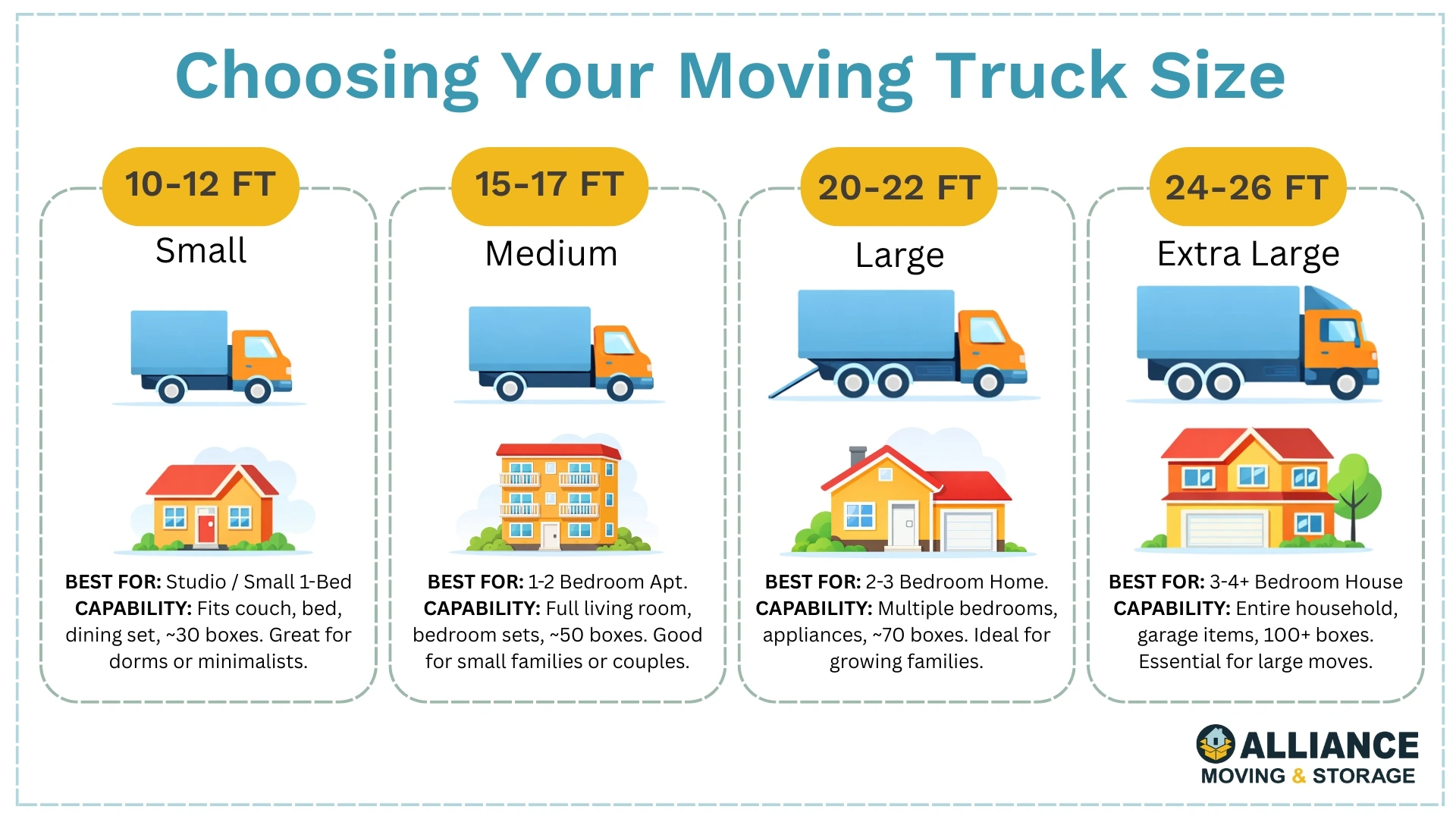
Your current home size provides a reliable starting point for estimating truck needs. Studios typically need 10-12 feet of cargo space, one-bedroom homes require 12-16 feet, two-bedroom residences fit best in 15-20 feet, and three-bedroom houses generally demand 20-26 feet. Keep in mind that square footage alone doesn't tell the whole story. Some people own minimal furniture while others have packed every closet with personal property.
Moving Distance
Local moves allow flexibility for making multiple trips if you miscalculate, though this wastes fuel and time. Long distance moves demand accuracy since you can't easily return for forgotten items. The further you travel, the more important it becomes to get the size right the first time.
Weight Capacity
Trucks have maximum weight limits alongside size restrictions. Heavy items like pianos, safes, and exercise equipment add up fast. Check the rental terms to confirm your load won't exceed the vehicle's capacity, which could result in fees or safety issues during transport.
Special Items
Fragile items like electronics, antiques, or artwork need extra padding and careful placement. Pianos, large appliances, and heavy machinery demand specific loading techniques and more vertical space. If you own a significant amount of these specialized belongings, factor in additional room for protective materials and strategic arrangement.
Moving Truck Size Chart: How Big of a Moving Truck Do I Need?
Understanding sizes of moving trucks means matching your belongings to the appropriate cargo capacity. Here's a breakdown of common size of moving trucks and what they typically hold.
10-12 Foot Trucks
These compact options work well for studio apartments or small one-bedroom spaces with minimal furniture. You'll fit a couch, bed frame, small kitchen table, and a few chairs along with your boxes. Most people underestimate how big of a moving truck they need, especially when adding clothes, kitchen items, and personal vehicle overflow.
Important note: If you're moving from a self-storage unit of similar size, this truck should match your needs — but always confirm the actual dimensions before committing.
15-17 Foot Trucks
This mid-range size truck handles one to two-bedroom apartments comfortably. Load your full living room set, bedroom furniture, kitchen table with chairs, and standard appliances. The extra space allows for better organization, reducing the risk of making multiple trips or cramming items unsafely.
20-22 Foot Trucks
Perfect for two to three-bedroom homes, these trucks accommodate most household moves without feeling cramped. You'll fit multiple bedroom sets, dining room furniture, large appliances, outdoor furniture, and plenty of boxes. The added height in these models also provides room to stack boxes securely without crushing items underneath.
For a 2000 sq ft house with moderate furnishings, this size typically suffices. However, if your home includes a full garage, workshop, or extensive storage areas, consider the next size up.
24-26 Foot Trucks
The largest option available from most rental companies, these trucks handle three to four-bedroom homes with ease. They're essential for families with accumulated belongings, outdoor equipment, and garage items. While large trucks cost more upfront, they prevent the expense and hassle of making multiple trips or renting additional storage space.
Storage solutions: If you're moving a 10x10 storage unit, a 15-17 foot truck usually works, but a 20-footer gives you breathing room if your unit is packed tightly or contains large pieces.
How to Calculate Your Exact Truck Needs
Learning how to know what size moving truck you need requires more than guessing. Use these practical methods to nail down your requirements before you commit to a rental.
Create a Room-by-Room Inventory
Start in one room and list every piece of furniture, then estimate boxes needed for that space. Move methodically through your entire home, noting dimensions of larger items. This detailed approach reveals the true scope of your belongings and prevents surprises on moving day.
Measure Large Furniture Pieces
Don't assume everything will fit. Measure your couch, dining table, bedroom sets, and appliances, then compare those dimensions to the truck's interior cargo space. Pay attention to doorway widths in your current home and the truck's loading ramp — oversized furniture might not make it through standard openings without professional furniture moving assistance.

Estimate Box Quantities Accurately
Most people underestimate how many boxes they'll pack. Kitchens alone can require 15-25 boxes for dishes, pantry items, and small appliances. Bedrooms need boxes for clothes, linens, and personal items. Add 10-20% more containers to your estimate to avoid running short. A moving box calculator helps determine exact quantities based on room sizes.
Common Mistakes When Choosing Truck Size
Avoid these pitfalls that trip up countless people every moving season. Learning from others' errors saves you time, money, and frustration during your relocation.
- Underestimating box volume: Most people pack more than expected. Kitchen items, clothes, and books fill space fast.
- Ignoring vertical space: Trucks offer height as well as length. Stack properly to use the full cargo area.
- Forgetting disassembly needs: Furniture disassembly saves space and prevents damage during transport.
- Skipping insurance: Accidents happen. Confirm your rental terms include coverage for personal property.
- Overestimating driving comfort: If you've never driven a large truck, a 26-footer can be stressful to handle.
Getting the size right from the start eliminates costly mistakes and ensures your belongings travel safely to your new home.
Should You Rent a Truck or Hire Movers?
Choosing between a truck rental and professional movers depends on your budget, timeline, and comfort level with the moving process. Each option offers distinct advantages and challenges worth considering.
Renting a truck makes sense if you have a small move, a tight budget, and friends willing to help. You'll save money upfront, but factor in fuel costs, insurance, equipment rentals, and your own time. Loading and unloading alone can take hours without experience, and improper packing increases the risk of damaged belongings.
Hiring professionals brings the right equipment and expertise to handle your move efficiently. They pack securely and finish much faster than DIY attempts. Especially for long-distance trips, movers provide peace of mind and can be surprisingly cost-effective. Their help is even more valuable during peak seasons or complex moves.
Tips for Loading a Moving Truck Efficiently
Once you've secured the right size truck, smart loading makes all the difference. Proper techniques protect your belongings and maximize available space.
- Load the heaviest items first: Place appliances and furniture at the front near the cab for proper weight distribution.
- Protect fragile items: Wrap breakables, place them on sturdy boxes, and secure with straps or blankets.
- Fill gaps strategically: Use clothes and linens to fill spaces between furniture and prevent shifting.
- Keep essentials accessible: Load boxes with important documents and necessities last for easy access.
- Secure everything: Use tie-down straps to anchor furniture and boxes, preventing movement during transport.
Taking extra time to load correctly saves you from dealing with damaged belongings or shifted cargo at your destination.
Get the Right Truck Size for Your Move
Choosing the correct truck size hinges on accurate inventory, realistic estimates, and understanding your home's actual needs. A studio apartment fits comfortably in a 10-12 foot truck, while a three-bedroom house demands 20-26 feet of space. Always account for special items, avoid common sizing mistakes, and create detailed inventories to confirm your estimate.
Alliance Moving & Storage is a trusted Chicago moving company serving the entire Chicagoland area with comprehensive residential and commercial services. Our experienced team handles everything from packing to transport, eliminating the hassle of truck rentals and DIY logistics. Contact us today for a free quote and discover how we make your move easier.





.jpg)